
TEJIDA · PROCESS
Process
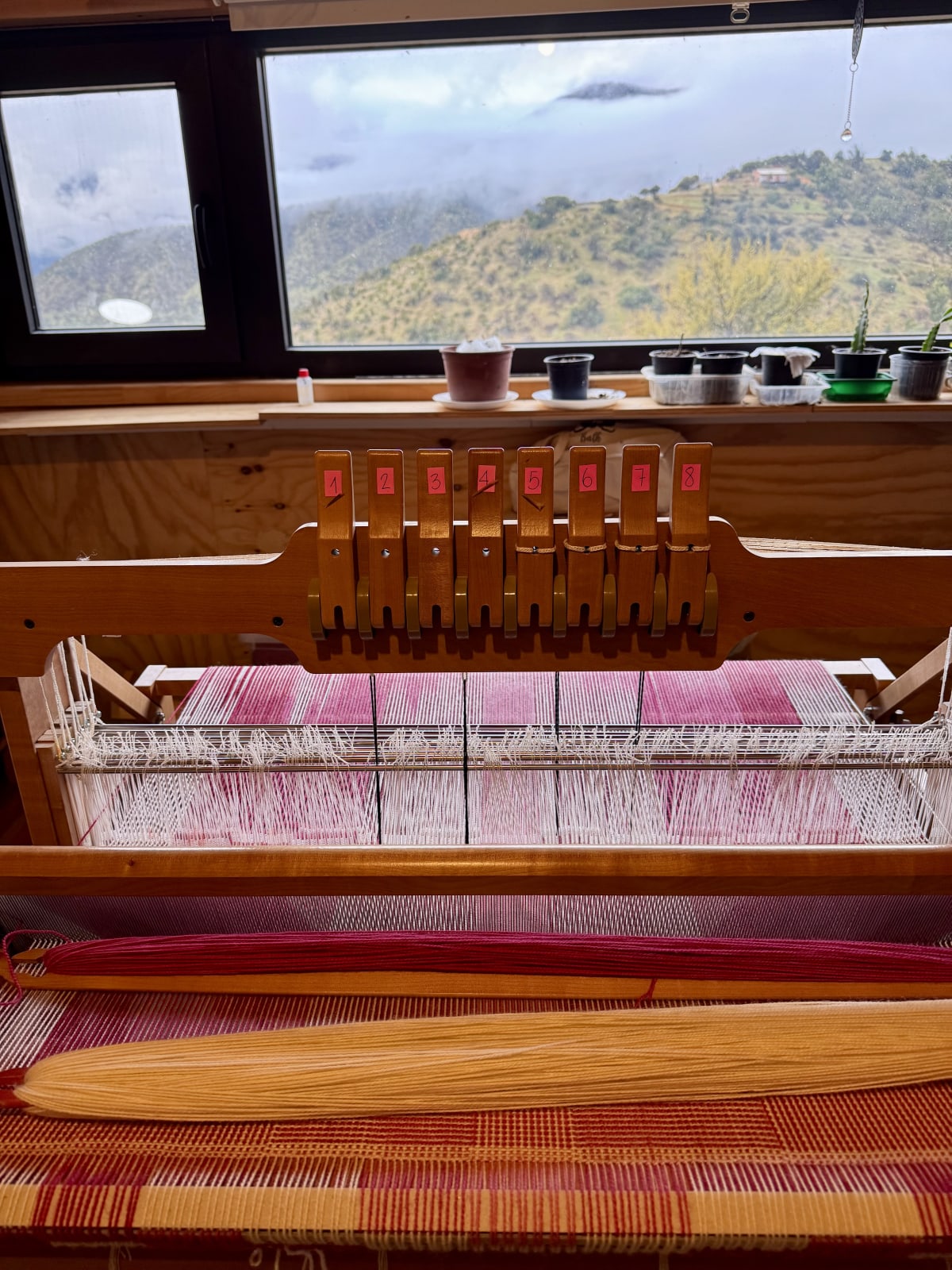
Studio
TEJIDA is a studio in Curacaví, near Santiago, Chile. Each piece is born from the slow rhythm of the loom and from fibres gathered with intention over the years.
The word and the thread behave as processes in the cosmos.
The process is a language and a woven design is a process representing itself.
— Cecilia Vicuña, Word & Thread (1996)
Materials
TEJIDA works with natural fibres: wool from different breeds, alpaca, linen, hemp, cotton, and silk. Each one has its own character and best use.
Wool is the studio's main fibre. It has a memory of its own: it shapes to the body, regulates temperature, warms without weight, and feels alive to the touch. A well-woven wool piece can last decades and improve with time.
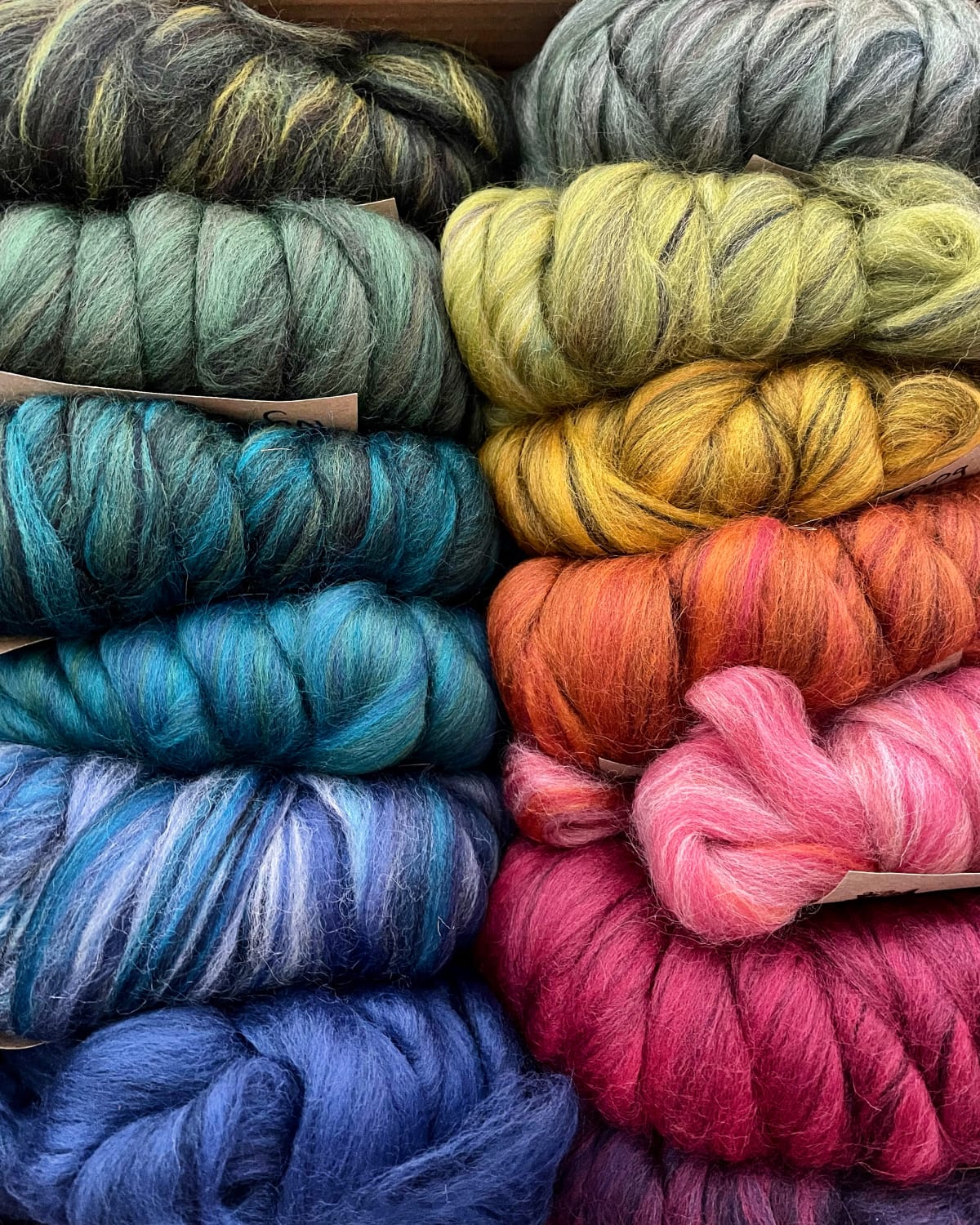
Harvest Hues Top — 50% Exmoor Blueface · 30% Bluefaced Leicester · 20% Wensleydale · 2021
Sustainability
Working with natural fibres isn't only an aesthetic preference. It's a decision about what we leave behind.
Every fibre that enters the studio is compostable: when a piece ends its life, the soil can take it back without leaving microplastics, without poisoning groundwater, without adding to the weight of what no longer fits anywhere. The textile industry is one of the most polluting on the planet. Weaving slowly, with materials that respect that cycle, is a small and stubborn way of refusing to take part in that harm.
Dyeing follows the same logic: water that goes back to the garden, fibre scraps kept for future pieces. Nothing is discarded without first considering whether it can have another life.

Curacaví, Chile · August 2025
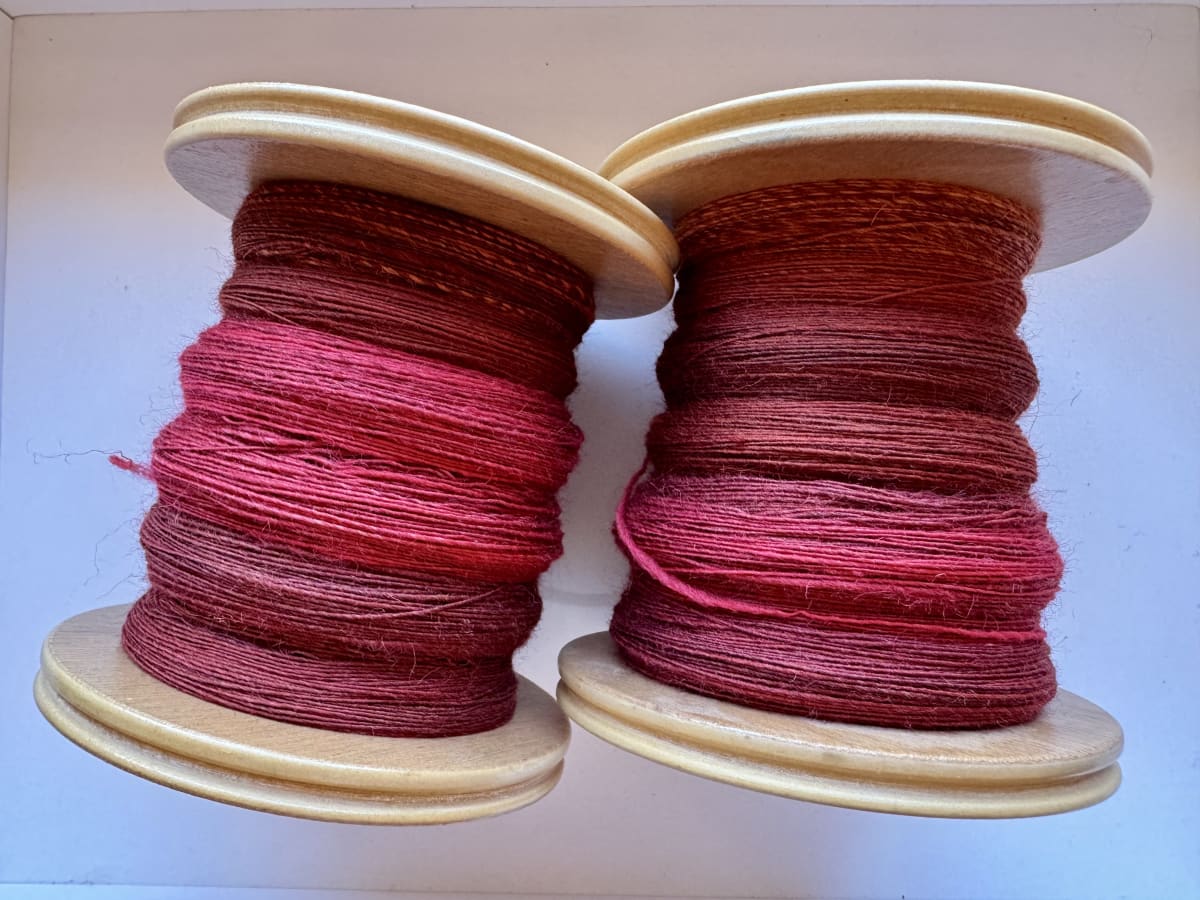
From thread to piece
Before the loom
Sometimes the process starts much earlier: spinning the fibre by hand or dyeing the wool with plants grown or foraged. Not every piece goes through this stage — some begin with yarn already spun or dyed, chosen with the same care.
Design and planning
Every piece starts on paper: the pattern, the colours, the dimensions. Calculating how many threads, what thickness, in what order. This stage defines everything that follows.
Setting up the loom
Winding the warp, bringing it to the loom, threading each end through the heddles and the reed, tying on. It's slow and meticulous. Every thread in its place.
Weaving and finishing
Only now does the weft come in. Weaving, taking the piece off the loom, finishing by hand, washing, pressing. And it's done.
The thread dies when it is released, but comes alive in the loom: the tension gives it a heart.
— Cecilia Vicuña, Word & Thread (1996)